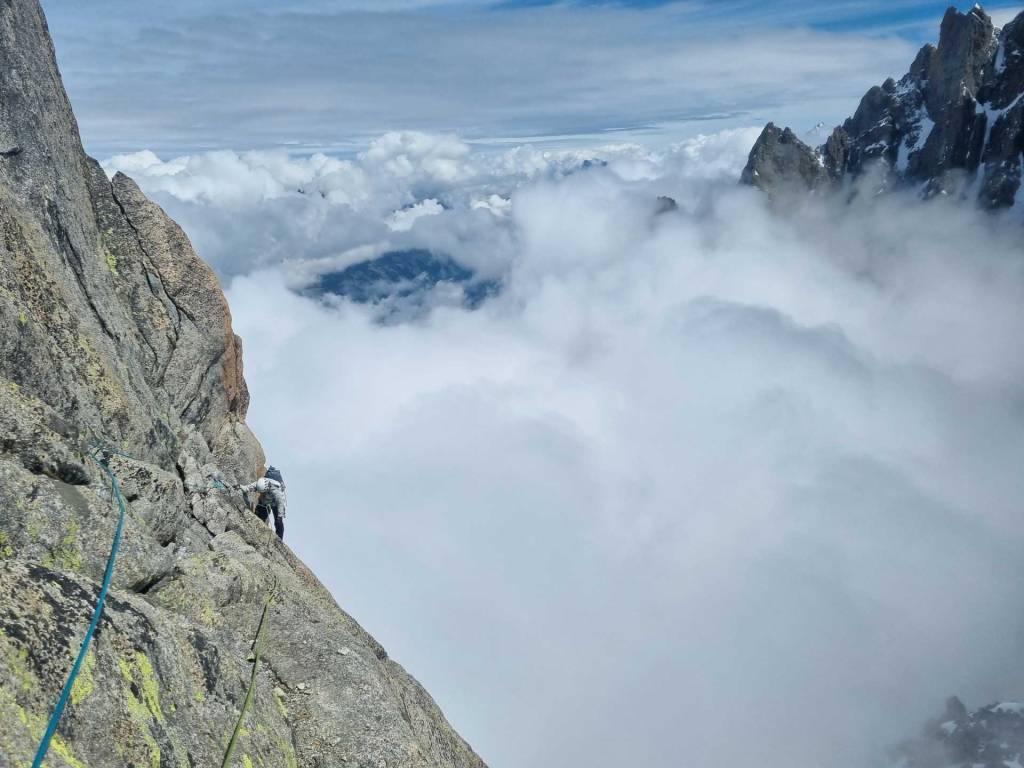
The Frendo Spur had been sitting near the top of my bucket list of alpine climbs for a long time. A long and beautiful route on an imposing alpine north face combining a glaciated approach with substantial sections of both rock and ice climbing, clearly visible from almost anywhere in Chamonix and with the added appeal of a comfortable cable car descent, the Frendo seemed to have it all. I had drooled over it in guide books and tried to observe it as best as I could from the Plan de l’Aiguille and from the cable car on the way up and down to the Aiguille du Midi, and on clear nights I’d occasionally look for the flickering beams of headlights high on the spur that would have indicated the positions of bivying climbers. I never saw any. By the end of June I’d heard that conditions on the Frendo were favorable, and so when E — a climbing friend of mine — near the end of her stay in town asked if I knew of any suitable routes that could be done in two days with a bivy on the wall, the choice was obvious.
May had seen lots of snow at altitude and the unstable weather continued throughout June and into July, but the forecast for July 2-3 looked at least mildly promising and so we decided on those dates for the climb and promptly began preparing. We decided on a single rack of cams with a couple of the mid-sizes doubled up, a few nuts, two ice screws each and 2×60 meter half ropes. We both brought rock shoes. After some back-and-forth discussion we decided to keep things simple by leaving the stove at home and bringing some additional water instead. For food I brought a bunch of energy bars and for the bivy I a lightweight bivy sack, a sleeping bag and a small pad.
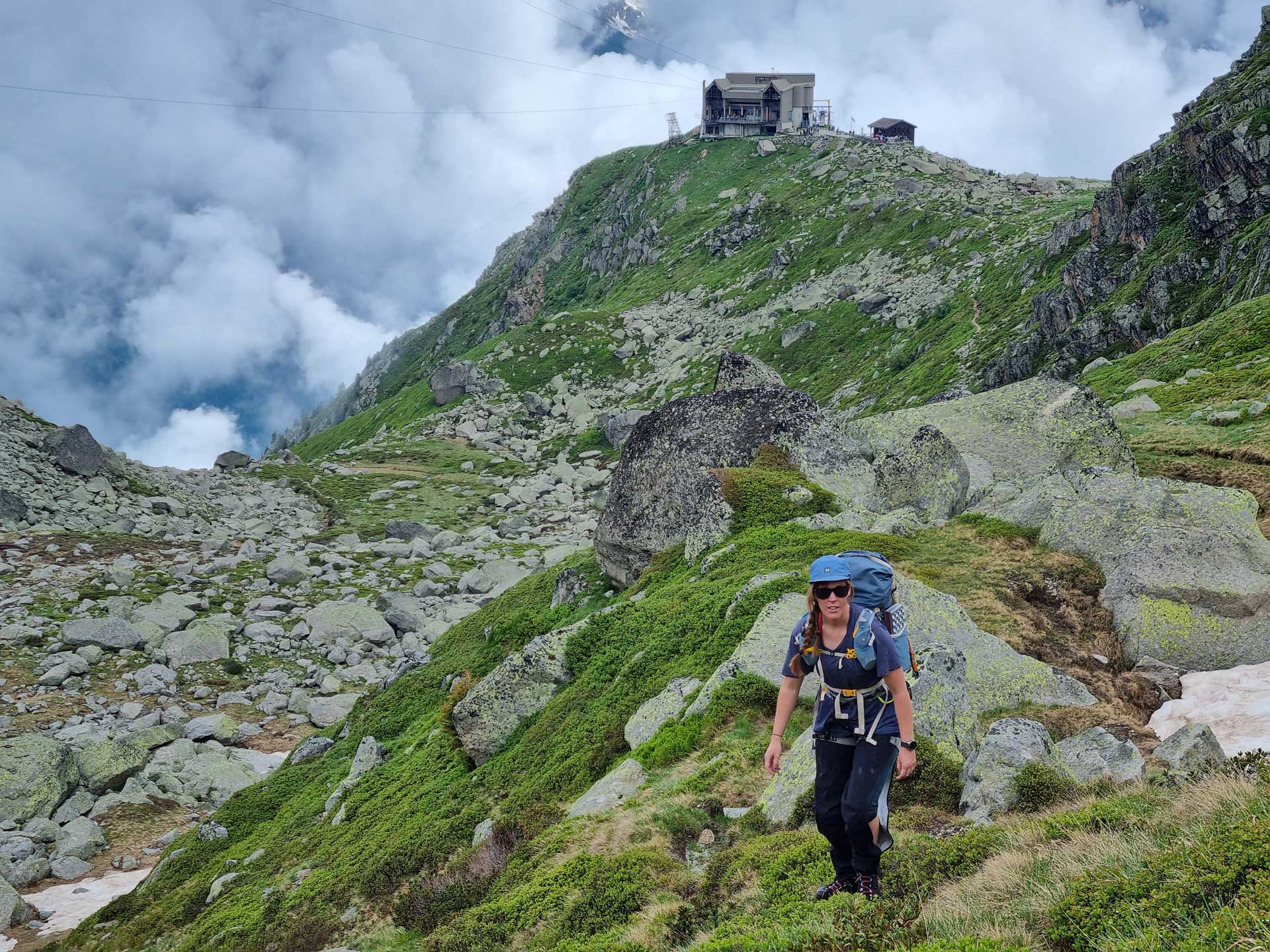
Having decided on spending two days on the wall, we opted for a late start on the first day to get some extra sleep and start the climb well rested. Happily unaware that this leisurely start would prove less than ideal, we headed to the Aiguille du Midi telepherique to catch a cabin at around 10:30am. We got off at the midway station at the Plan de l’Aiguille and from there we followed paths leading up and north toward the lateral moraine flanking the Pélerins glacier. Clouds clung to the rocky slopes and summits around us, hiding all but the lower rock sections from our view as we walked across the green hills. After about an hour we reached the glacier, at which point we put on crampons, roped up, and set our sights on a right leaning snow field at the far side of the glacier, which would take us onto the Frendo Spur.
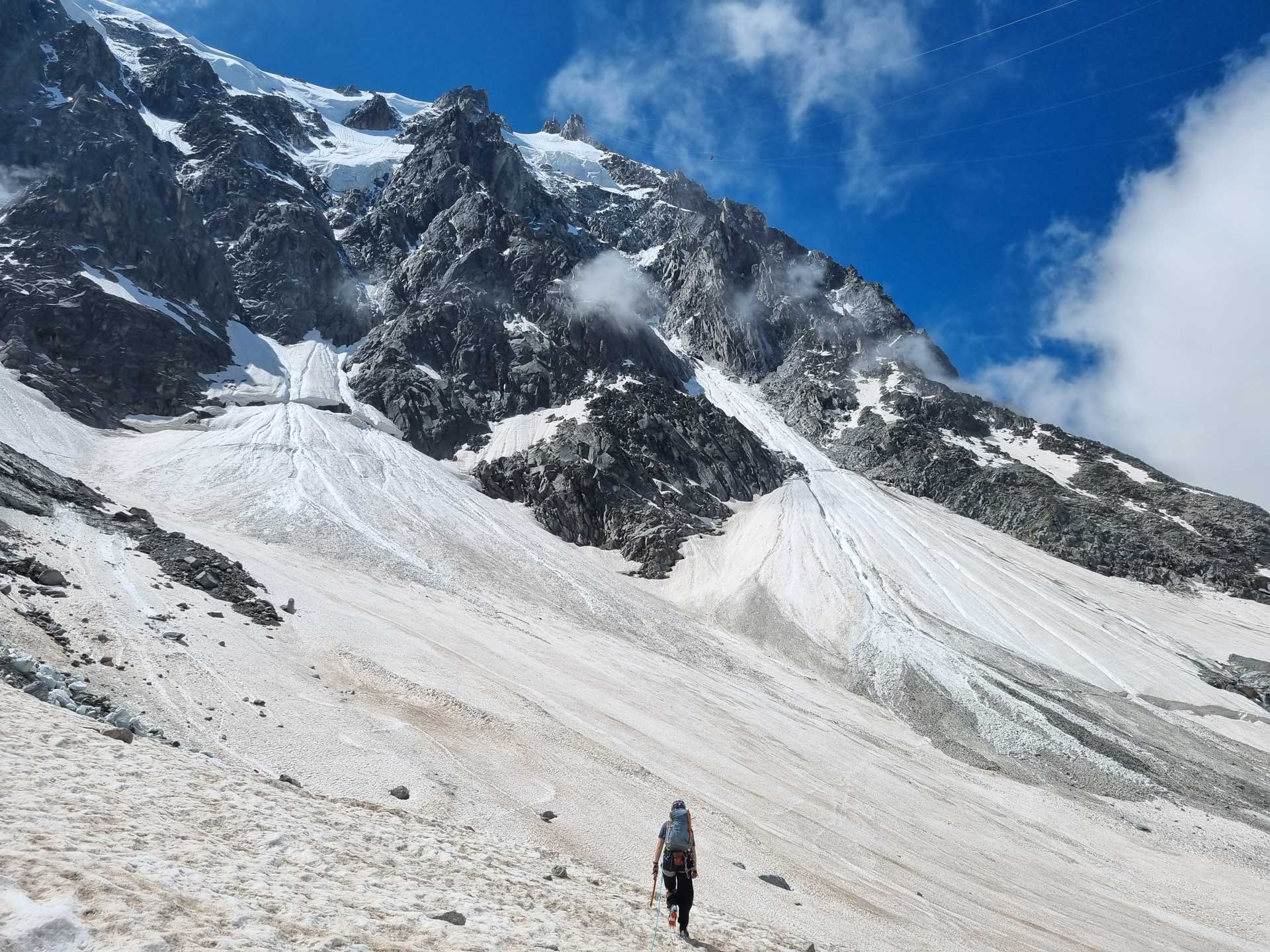
Crossing the glacier was uneventful but exciting. By this time most of the clouds had began to part, revealing great walls of rock and ice rising steeply from the glacier and forming jagged needles that clawed against the deep blue sky with its scorching sun high above. I could feel the anticipation grow as the clouds pulled back and the route was gradually revealed, and along with it the usual and expected tinge of apprehension when thinking of the unknown challenges ahead. The snow was slushy and slippery in the heat but since parts of the glacier are prone to rockfall we pushed on and tried to move quickly , and soon we found ourselves at the bergschrund, still mostly snow covered, at the base of the snow field that marks the beginning of the route proper.
I had hoped that there would have been steps in the snow. If nothing else just to show that we were on the right track. There were none, but fortunately this made little difference and we were able to quickly climb the snow field which then gave way to a short section of broken and occasionally loose rock. Then we stood at the foot of a wet, left-leaning ramp sprinkled with patches of snow and ice. The climbing was not difficult but still a bit exciting in alpine boots and crampons, and so we decided to pitch it out. Following the brisk, glaciated approach and simul-climbing of the snow field, this had the added benefit of slowing down the tempo enough to catch one’s breath and chow down on an energy bar or two.

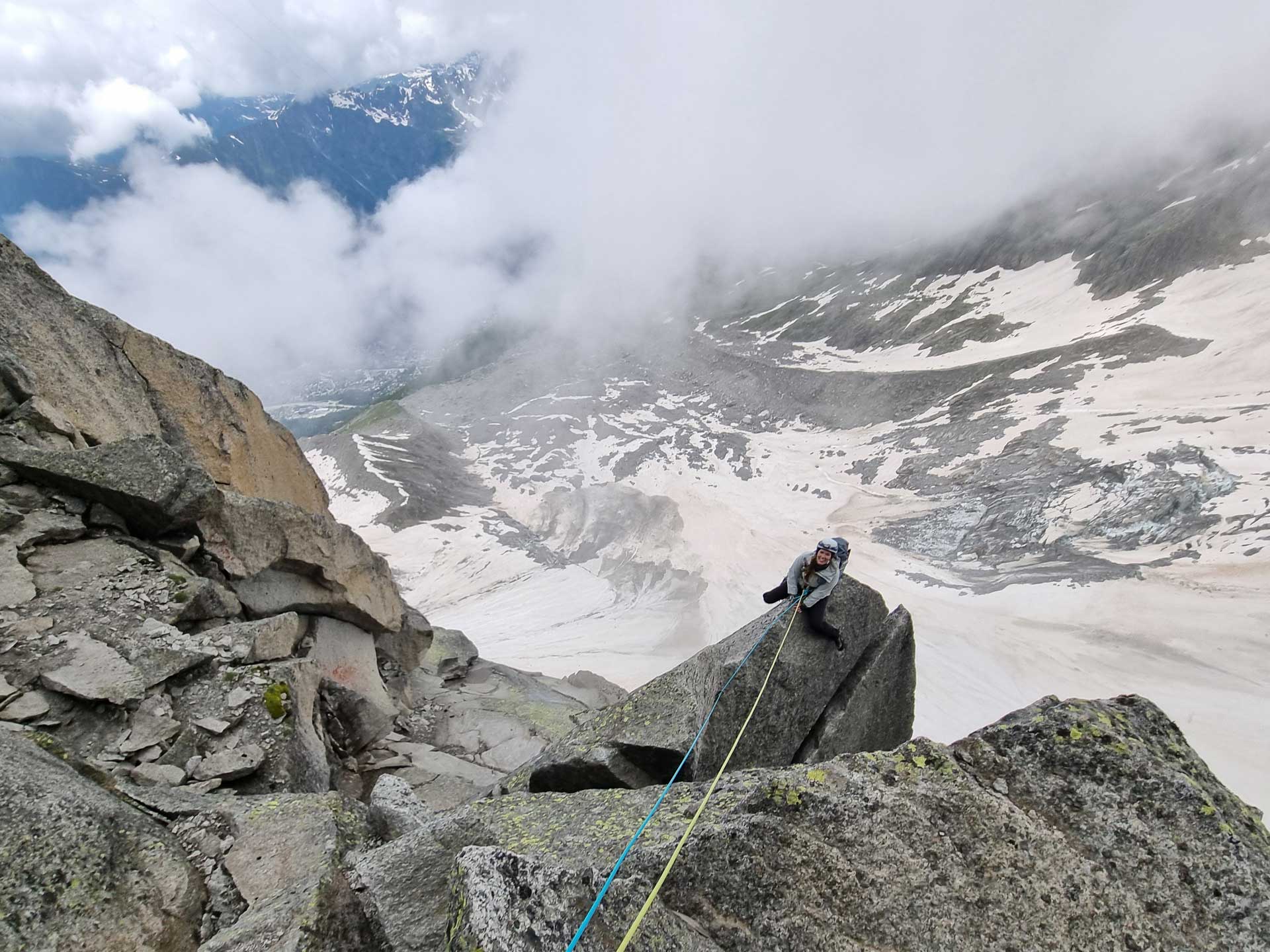
As we neared the end of the ramp we found some fixed gear and tat leading up to a small ledge on the right-hand side, where we stopped briefly to switch to rock boots. We then continued up and slightly to the right, trying to get nearer to the crest of the spur while avoiding difficult terrain. After a few pitches without any distinct defining features we found ourselves at the bottom of a diagonal, offwidth crack that I immediately recognized from pictures I had seen of the route. A few thrutchy moves later I was straddling the huge block which forms the upper part of the offwidth, huffing and puffing from the effort while taking in the immense view across the glacier below. Another memorable pitch with some fixed gear then finally led us to the crest of the spur, and from there we continued along easier terrain across ledges and ramps on the right-hand side of the crest until we reached a snow-filled gully.
By this time the weather had taken a turn for the worse. Visibility was down to a few tens of meters and the warm rays of the sun suddenly felt very far away. The gully went on for a few pitches and offered soft, mushy snow and occasional ice interspersed with loose rock that required a bit of care to navigate safely, but other than that presented no real difficulty. Near its end we found a snowy, exposed notch, and on the other side of the notch a steep rock section disappeared into the dim fog above. A soaking wet corner crack indicated the obvious way forward: the crux pitch of the route, graded at 5c. We decided that I should lead it.
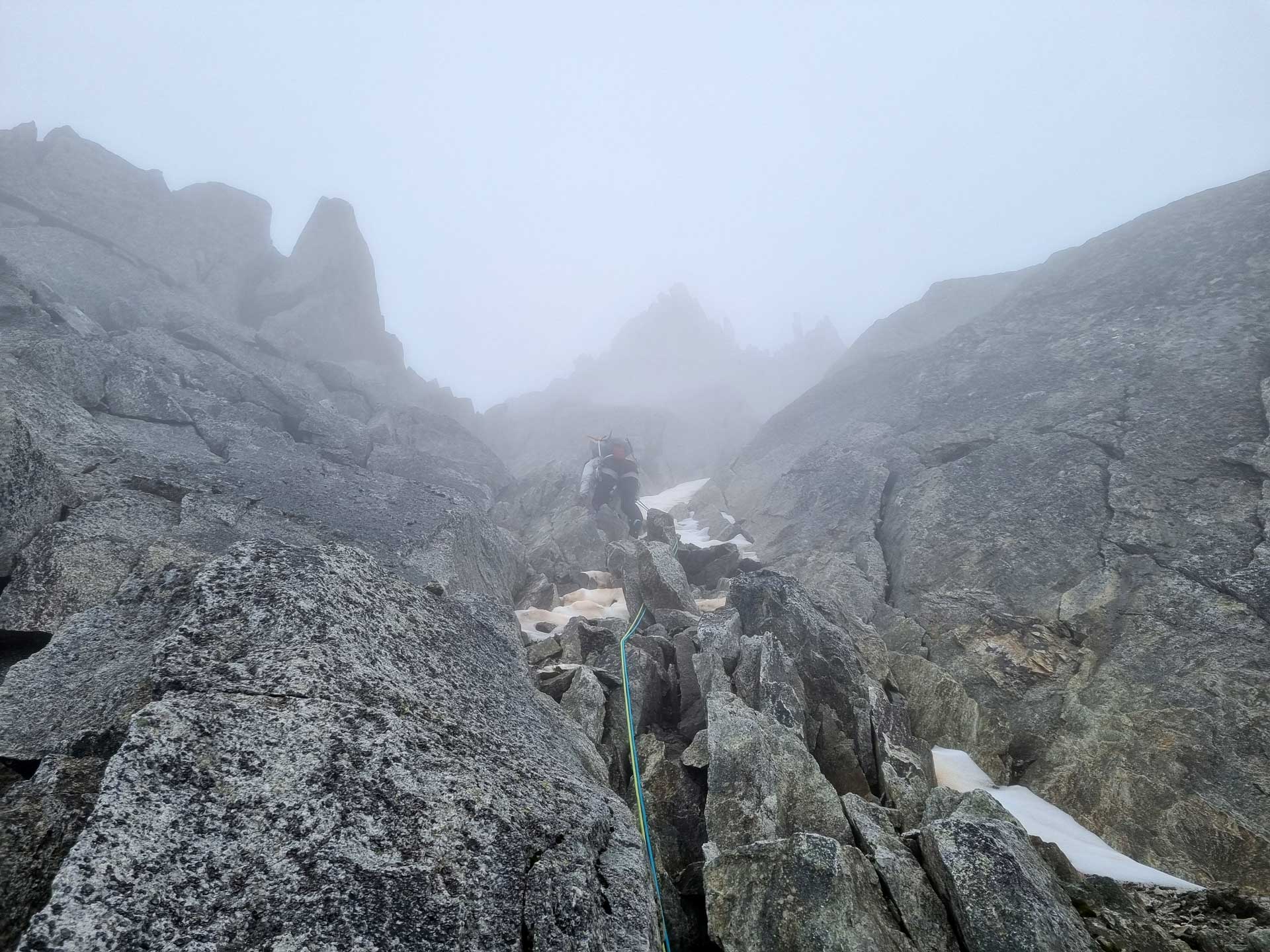
It was quickly getting darker and colder now. Every time I placed a piece of gear in the crack water started spouting from it like from a faucet. The climbing wasn’t too difficult but given the conditions it felt both physically and mentally demanding. The rock was slippery and cold, and I pulled on gear a couple of times when I couldn’t rely on friction. After a while I ran out of cams and at that point we decided to split the pitch into two. I had left my backpack behind at the bottom of the pitch and we improvised a way to haul it. It got stuck a couple of times, but luckily we were able to get it loose quickly. For the second part of the pitch I got my headlamp out, and by the time we had both topped out it had begun to snow and the rock was becoming wet all around us.
Fortunately we found a decent ledge just below our position and decided that our best option was to spend the night there and continue climbing early in the morning. Our original plan had been to climb to the top of the rock section and bivy there, but there were still several pitches of moderate climbing between us and that objective, and either way we figured that we’d be able to make up for it by starting early the next day.
I ate a couple of energy bars and tried to arrange my bivy in the most comfortable position possible, using one of the ropes to create a horizontal platform where the ledge began to slant off. My bivy sack is a on the small side, so I put my rain shell over my head and my shoulders to avoid getting wet in case of more precipitation. The snowing almost stopped. I fell asleep.

Regrettably, the weather gradually worsened during the night, with precipitation in the form of wet snow and rain continuing until morning. Each time I woke up I was colder and wetter than before. The rain jacket that I used to protect my head barely did the job, and I often woke up only to find it lying on the ground to either side of me, or the bivy sack to have slid down leaving my sleeping bag unprotected. Moving my head unleashed the small pools of ice cold water that had collected in the creases of the jacket and sent them pouring down my neck and face. At around 6 am it finally stopped snowing, and we concluded that getting up was the least undesirable option.

The morning light revealed a different landscape than what we’d last seen before falling asleep. Our ledge was covered in several centimeters of wet snow, and above us the route looked menacing in its new shroud of snow and ice. We considered bailing, but given the nature of the route that would most likely have been at least as difficult as pushing on ahead. I found my gloves lying on the ground next to me. I had intended to keep them inside the sleeping bag to try to keep them relatively dry, but had evidently forgotten to do so. Now they were soaking wet. Great!
We started climbing. The night had transformed what would otherwise have been moderate and straightforward terrain into something much more delicate and precarious. The climbing went slowly, but at least we were making progress.
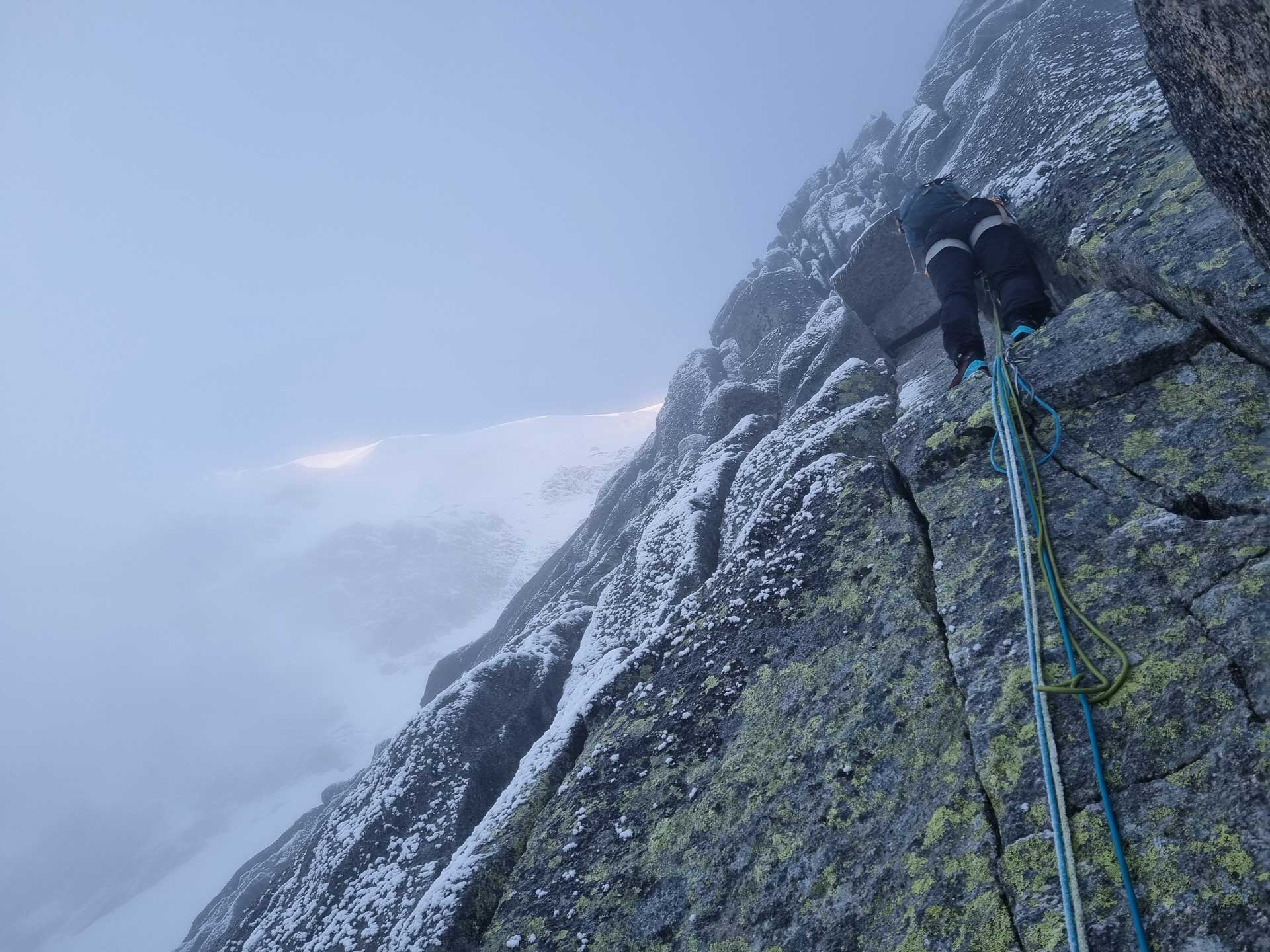
After three or four pitches the clouds scattered and we could see the sun light up the snow crest high above us. A little later we were climbing on the left-hand (east facing) side of the spur when all of a sudden we were bathed in warm rays as the sun finally rose above the Aiguille du Plan. Once this happened it didn’t take long for the rock to dry, and although snow and ice lingered wherever there was shade, scaling the remainder of the rock section in the sun became a rather enjoyable enterprise.

A few easy, traversing pitches in a stunning position marked the end of the rock section. Below us clouds covered the valley floor and contributed to an otherworldly atmosphere. We took a short break on a large ledge with a view toward the Aiguille du Midi and watched the telepherique cabins go up and down as we soaked in the sun and prepared for the snow and ice climb ahead of us. Crampons and ice tools were extracted from backpacks and racks were adjusted to account for the change of terrain. Above us we could see the contour of the famous snow ridge snaking its way up the slope toward the huge rognon that guards the top of the route. Soon we would make our way up it. The wind was picking up and clouds were beginning to gather and rise from the valley, so we decided to push on and try to make it to the top before the conditions got much worse.

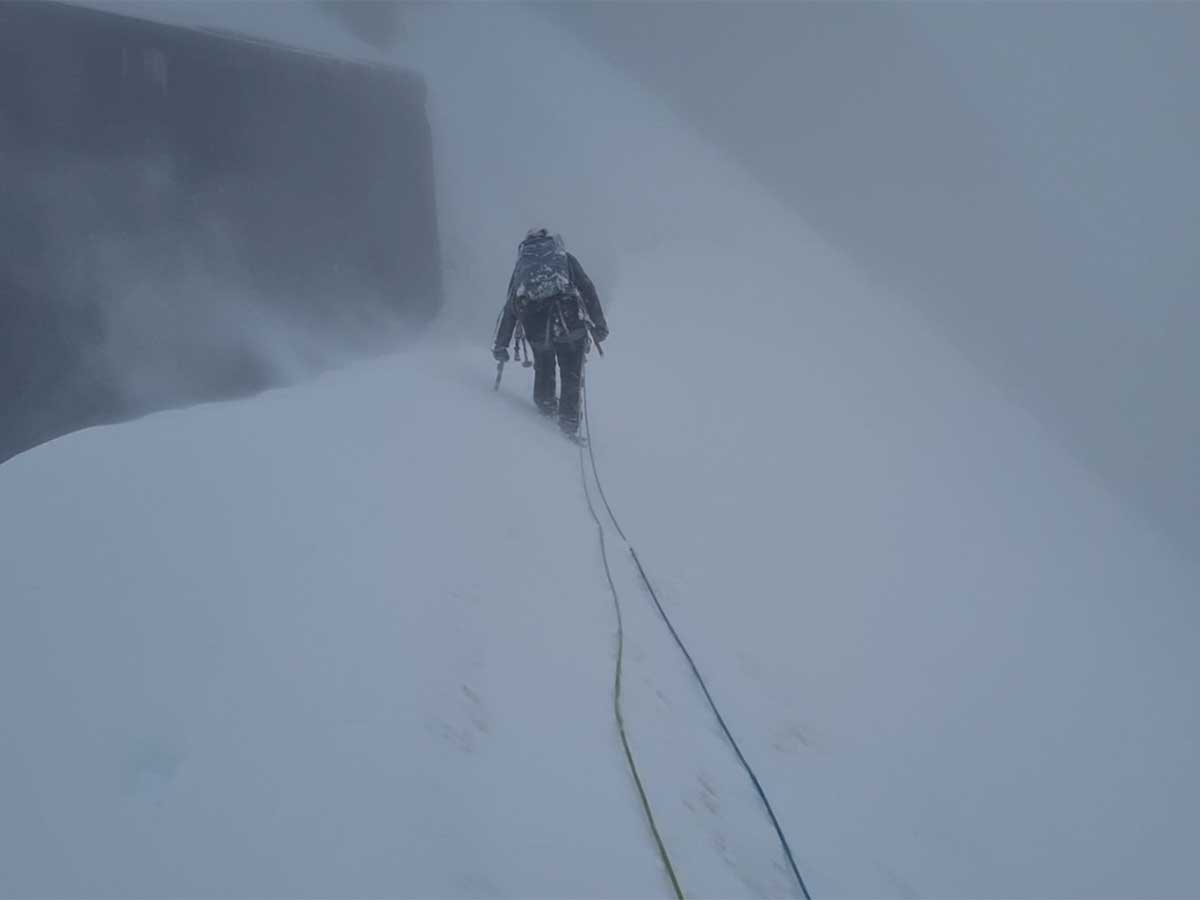
We simul-climbed the face up to the snow ridge and then continued along it heading straight for the rognon. The visibility was becoming worse by the minute — soon we couldn’t see the rognon at all — and while at first we had been able to follow faint footsteps along the ridge, they quickly disappeared as we climbed higher. After the ridge had petered out we found ourselves in an area of snow and scattered rocks without any clearly distinguishable features. A bit unsure of where to go, we decided to set up a belay and pitch out the rest of the route. The climbing was not difficult, but the snow was soft and variable and decent protection was hard to find and far between. By this time my gloves were frozen stiff, making rope handling a little difficult, but apart from that the climbing went without much difficulty. We kept moving up and left, trying to keep the pace up to keep warm and hoping that we were heading in the right direction. My fear was that we’d stray from the route and end up in a dead end in a gully somewhere — resulting in having to downclimb and losing precious time and energy — but after a few pitches I was able to spot a bolted belay station on a rock face to my right. Before long the face steepened and the soft snow became harder until it eventually became ice (a welcome change) and soon after we finally stood on the crest above the rognon, with only the final snow ridge to the Aiguille du Midi station left.

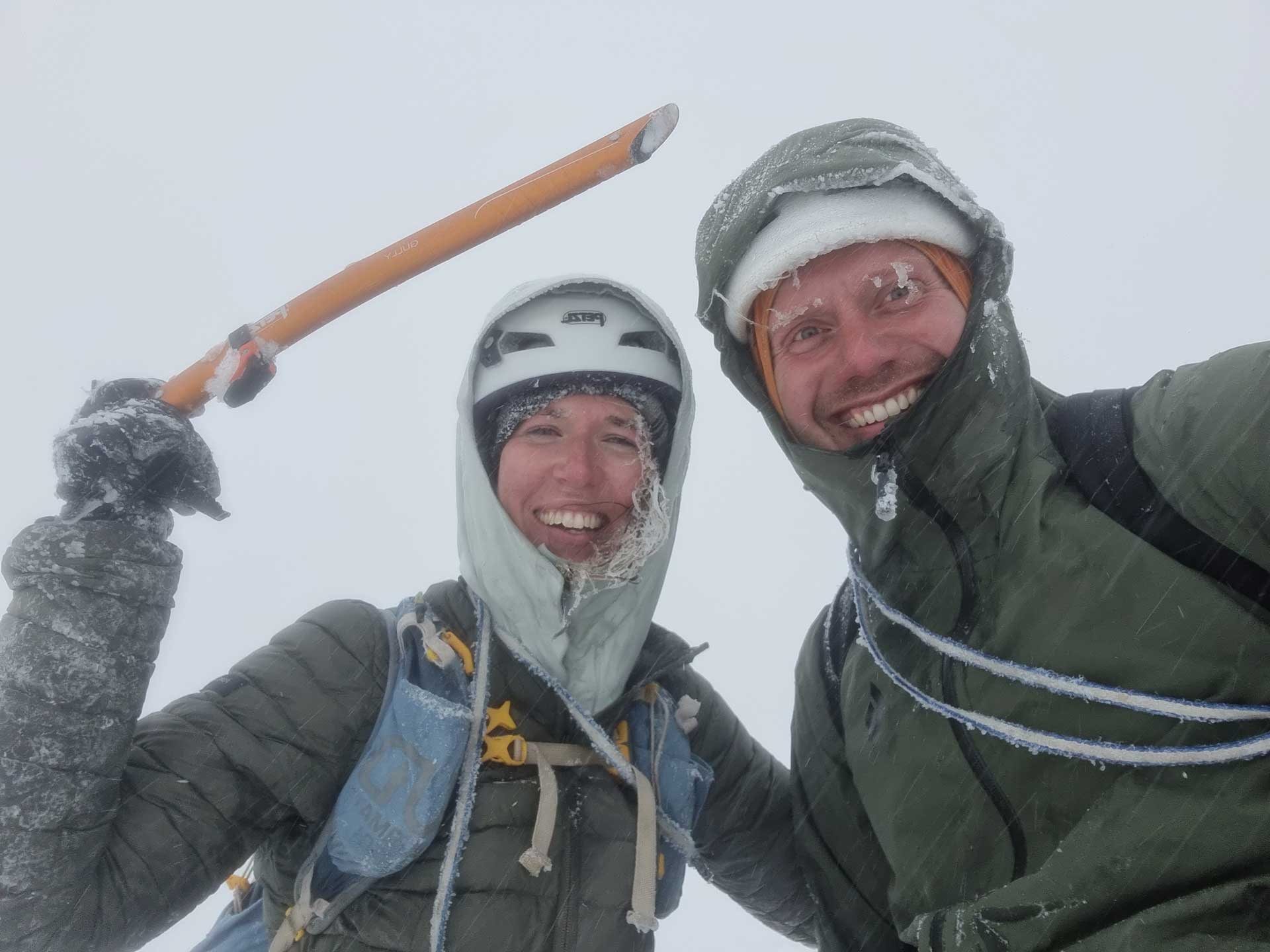
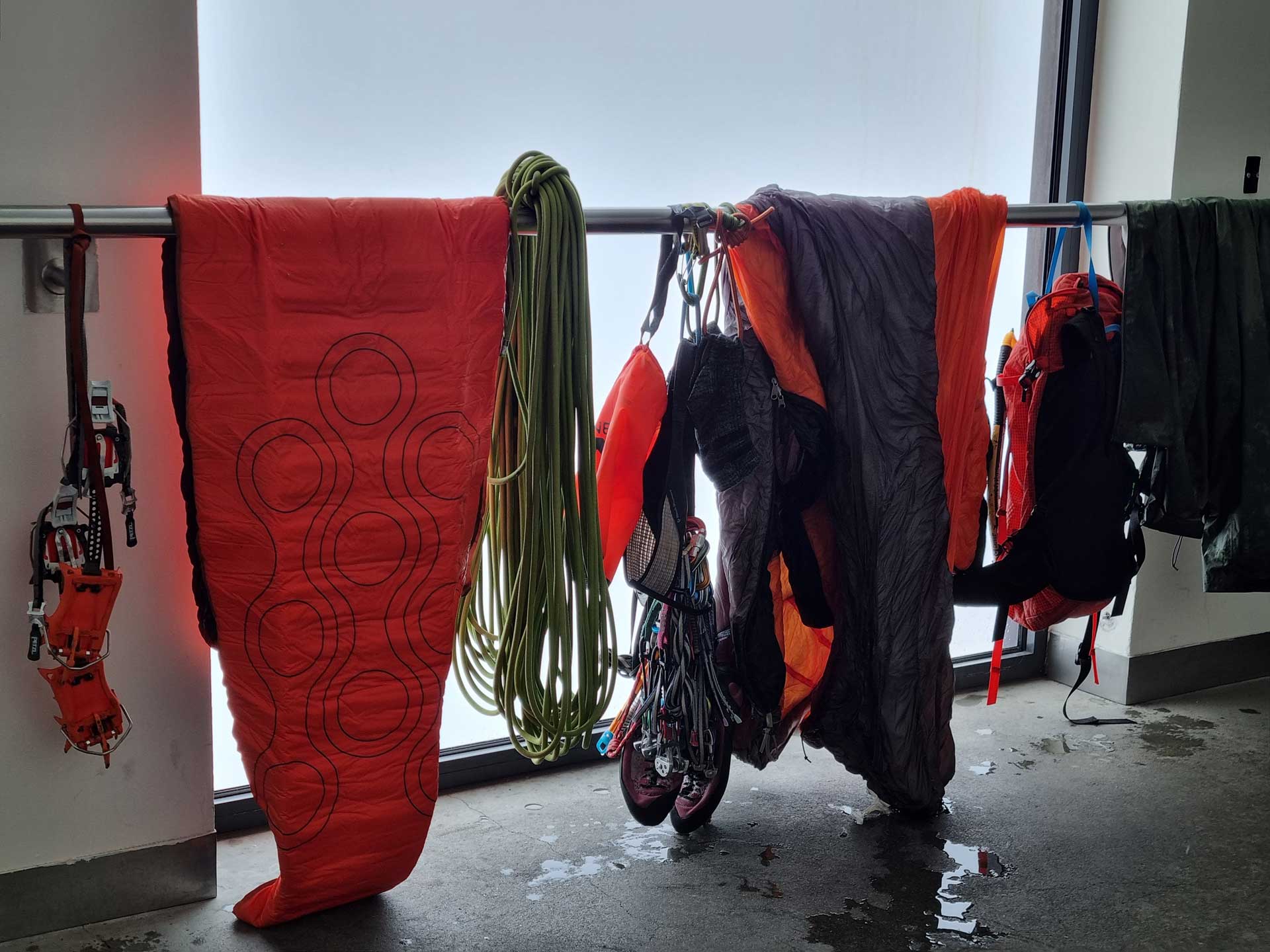
After forcing a smile and posing for the mandatory summit selfie, we quickly made our way up the last exposed steps to the shelter of the Aiguille du Midi, where we were promptly informed that we’d missed the last cabin down and would have to spend the night at the station. It was then around 6:30 pm. Four other climbers shared our fate and had already arranged their sleeping pads on the floor when we arrived.
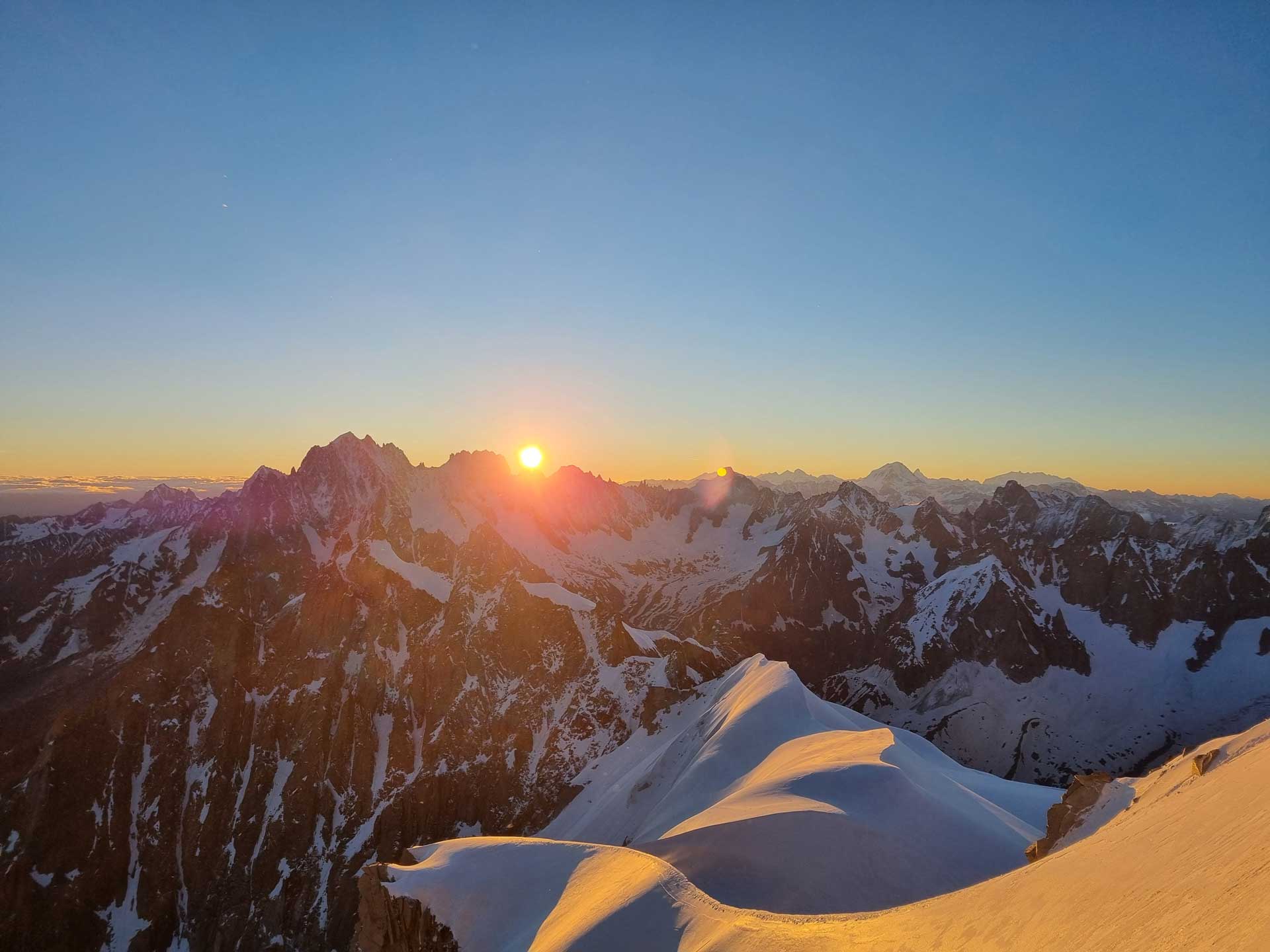
After a peaceful and uneventful night we woke to a brilliant morning as the sun began to climb over the mountains in the east. At some point during the night I realized that my sleeping pad valve was leaking, but I didn’t care much. We took the first cabin down to Chamonix and stopped by a grocery store to stock up on apple juice and madeleines before heading home to a well deserved breakfast.

 Uppförsbacken